If you’ve seen this acronym floating around or popping up in your mates’ lexicons, and you’re wondering what the heck it is and how it’s pronounced, no shame. We’ve got you.
EOFY stands for End of Financial Year, and people say it in all different kinds of ways. Some like to say ee-off-ee, which is a bit of fun! Others like to spell it out, E.O.F.Y. The choice is yours, but make sure you have a good time while doing it. That’s what finances are all about.
Now to the nitty gritty of what this actually means. If you’re a sole trader, there’s quite a lot you need to do when this time of year creeps up, as it inevitably does.
When is the EOFY?
In Aotearoa, the financial year ends on the 31st of March, and the new financial year begins the next day, on April 1st.
Why is the EOFY significant?
As the financial year comes to a close, businesses begin to do a whole lot of admin in preparation for tax time. This might look like taking stock of their products, checking all their financial records for the past 12 months are up to scratch, and gathering any necessary bits and pieces they need to complete their tax return.
You might see some flashy EOFY advertising creeping into your inbox during this time, (although EOFY sales are more common in Australia, really), as businesses are trying to shift stock and hit targets by bringing in as much revenue as possible before the ‘financial clock’ strikes midnight.
For many sole traders, the next big date after 31 March is filing their income tax return (IR3) – it’s usually due 7 July, unless you have a tax agent (like Hnry!) or an extension of time.
What do sole traders need to do for the EOFY?
There are a few things you’ll need in order to complete and file your tax return. Now the financial year is over, you’ll need:
- A record of all of your taxable income.
- If you’ve earned a salary income through a part-time or full-time position as well as income through your sole-trader business, the IRD wants (in fact, needs) to know about it.
- The business expenses you’re claiming.
- If you’ve paid for things throughout the past year that were business related expenses, you can claim these at tax time. You’ll need to keep all expense receipts for seven years, as required by the IRD.
These records and receipts should cover the whole financial year (1 April to 31 March).
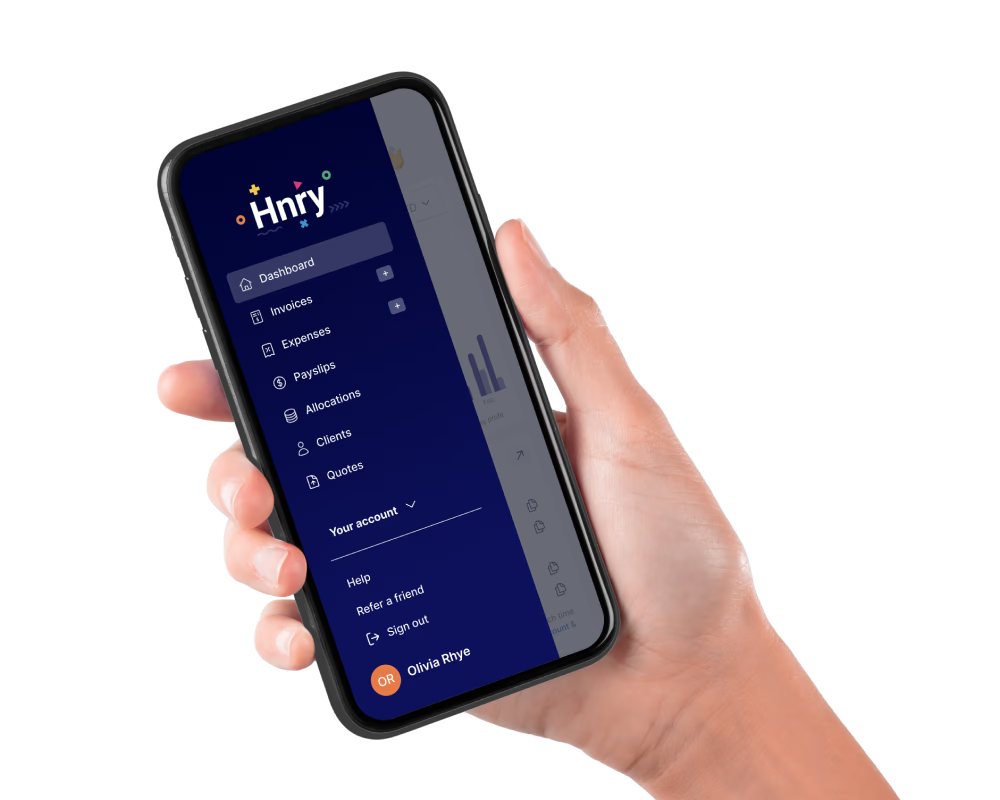
Prepare for the EOFY with Hnry
If sorting your own tax stuff sounds overwhelming, we completely understand. In fact, that’s why we exist – to make tax time simple for all sole traders.
Hnry is an award-winning sole trader accounting service. For just 1% +GST of your self-employed income, capped at $1,500 +GST a year, we will automatically calculate and deduct your:
If you’re a Hnry customer, when the EOFY arrives:
- Your taxes and levies will have already been paid
- You confirm your details are correct, and your expense claims are up to date, then
- We’ll prepare your tax return, and once it’s ready, file it for you.
No huge, unexpected tax bill, no stack of paperwork, no tax calculations – Hnry does it all for you.
Get your tax ducks (and deductions!) in a row by joining Hnry today.
P.S. For extra brownie points, check out our guide to hit the ground running in the new financial year.