

What is your favourite brand? Is it those golden arches, or the swoosh? Perhaps it’s a bright red can on a hot summer’s day? These are internationally recognised businesses, and they share a few traits. They have distinct names, a catchy tagline, memorable visual elements, and strong values.
As a sole trader, building a brand may not be as crucial as it is for larger corporations, but it’s still important (especially if you’re aiming for world domination). Good branding can help you reach a new or wider audience, build a strong reputation in your market, set yourself apart from your competitors – and hopefully turn a higher profit.
In order to successfully build your business’s brand, there are a few things you could think about – and don’t worry, we’re here to help. Let’s unpack the basics of branding and why it’s so important, then walk you through how to create a brand identity.
Why build a brand?
At this point, you may be wondering why you even need a strong brand. Think about it this way: A brand is like a cheat sheet for your business, showing who you are and what you do.
Having a strong brand helps your business become recognisable – just think of McDonald’s. The McDonald’s brand is widely recognised, and so is what they offer customers; for a lot of people, those golden arches go hand in hand with a burger and fries. This could become true for your business (although probably on a smaller scale). If you build a well-known, reliable brand, potential customers will think of you when they require your services, whatever they may be.
Another benefit is that branding is personal; it offers you an opportunity to share your values and mission, giving you an edge over competitors who are more generic, or who heavily lean on AI content creation. In an AI-saturated market, this could be a real turning point for your business. People are increasingly using AI but having a personable human brand could help potential customers relate to you.

How to build your brand
The three key questions
So, now you know why you need a brand, you’re probably wondering how to build one. It can feel daunting, but don’t worry – we’ve broken it down into simple, easy steps.
Before you get into the nitty-gritty details, a good place to start is to ask yourself these big-picture questions:
- What do you do?
- Who do you do it for?
- What is your superpower?
By superpower, we mean the true value you provide to clients; it’s how your services improve their lives.
Once you have three answers, think about what ways to communicate them that will really resonate with your customers – in essence, that’s all branding is! Remember, your brand isn’t just about what you do; it’s about the people you do things for.
From this starting point, you can explore the finer details of branding – things like:
- A business name
- A logo
- Brand colours
- Brand values
- A mascot (for bonus points)
Just remember, branding doesn’t look the same for everyone. These elements are great examples, but ultimately, you don’t need all of them – you decide which are relevant for you.
Meet Ruth Rye
Ruth Rye has recently registered as a sole trader and wants to develop her bakery delivery brand. Ruth personally bakes bread every morning and then delivers them to her customers’ doors. Her mission is to make high-quality bread available to everyone who wants it, despite busy schedules.
After Ruth has established her big-picture brand elements using those three key questions, she can start exploring the finer details.
Your business name
It may sound obvious, but all good brands need a name! Names represent your business, so think of a word or phrase that reflects what you do. Pro tip: choose something easy to remember so customers…remember it. Alongside your other branding basics, a good name can set you apart from the crowd.
Once you have some name ideas, you will need to check if you actually can use them – you can’t choose a name (or a nearly identical name) used by another registered business in the same country you are operating in. You also generally can’t use a name or phrase trademarked by another company in a similar industry.
Similarly, words or phrases may be trademarked by someone for other purposes – like the name of a product. There may not be a registered business called “Peanut Slab”, but you still can’t use that as your business name because Whittaker’s has trademarked it for one of their products.
If all this sounds like a lot, don’t fret – you can check your business name against existing trademarks using the Intellectual Property New Zealand website and the New Zealand Companies Register.
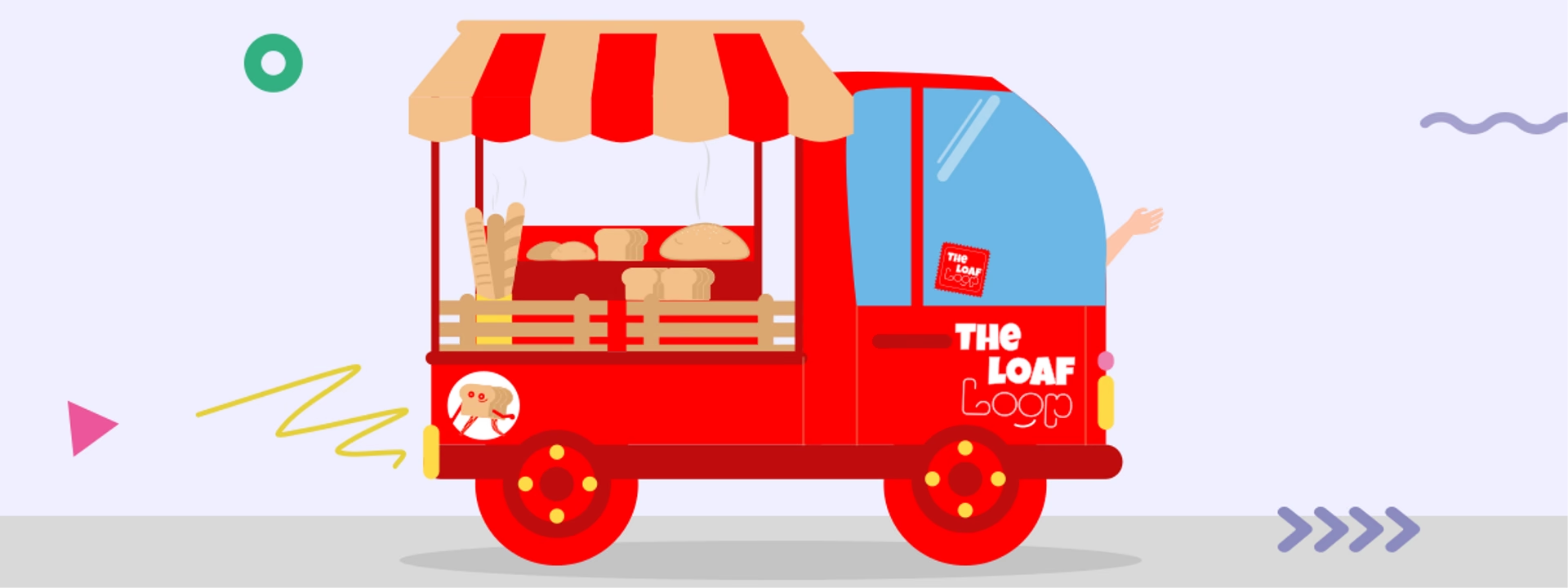
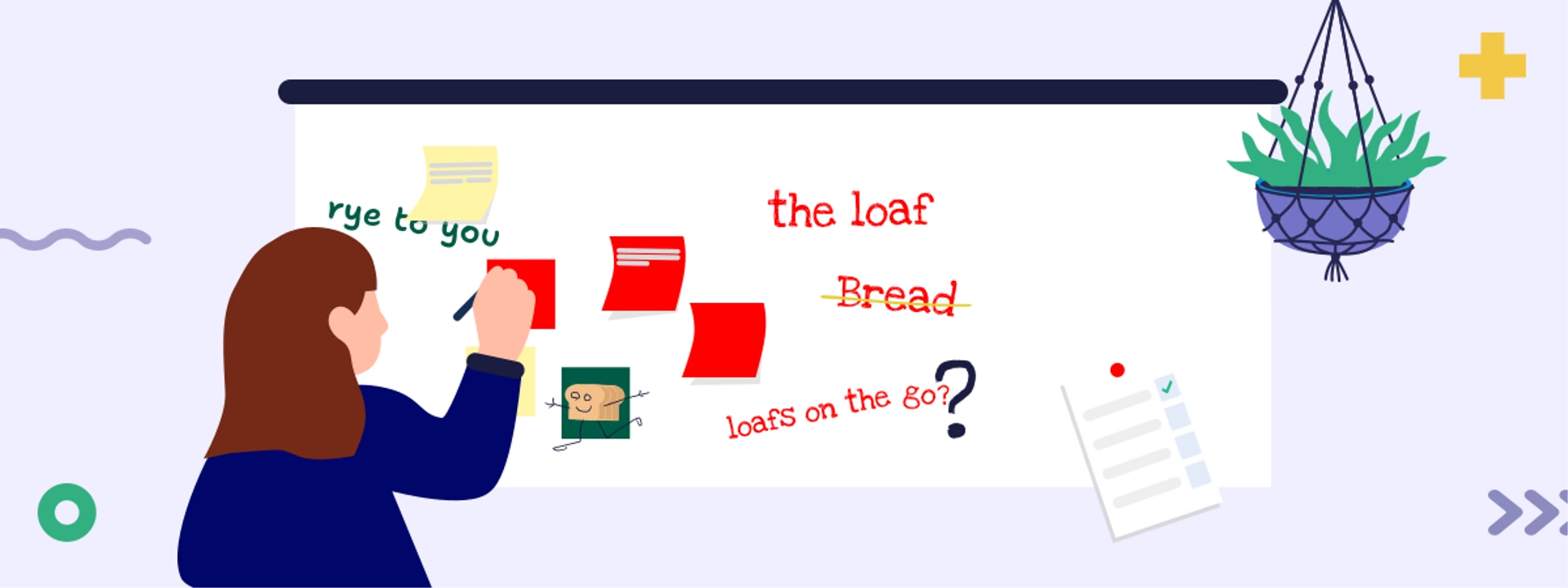
Ruth decides to call her business The Loaf Loop, as her primary objective is to deliver freshly baked loaves of bread to her customers’ homes – kind of like a paper run…with rye. She checks the IPONZ website to ensure The Loaf Loop is free to use and then registers for a New Zealand Business Number.
Writing a tagline
A tagline is a short, catchy phrase that reflects the essence of your brand. Of course, you don’t need to include a tagline, but businesses sometimes add this to their logo to further differentiate their brand from others.
Ruth decides to use ‘Like a paper run…with rye’, and performs a trademark check. IPONZ flags any trademarked names or slogans that could cause issues due to similarity. Ruth’s check returns “Just like a chocolate milkshake only crunchy,” as a phrase trademarked by another business with similarities. After some deliberation, she decides the two slogans are different enough not to get flagged by IPONZ.
Creating a logo and (perhaps) a mascot
A logo is a visual representation of your brand, usually in the form of a graphic or a word written in a distinct font or style. Think of your logo as the symbol of your business, helping it become recognisable. This could really help you stand out in a crowded market.
For example, when you see a sneaker with a swoosh on the side, you probably know where it came from.
Who is your mascot?
A mascot is essentially a character that represents your brand – kind of like an extension of your logo.
Now, a mascot isn’t crucial for a brand, but it will certainly help to set you apart from the crowd. If you’re a builder, you don’t need a mascot, but having a picture of Chip – the sociable Huntaway – on your ute differentiates you from all the other builders who don’t have a cute dog on their vehicle.
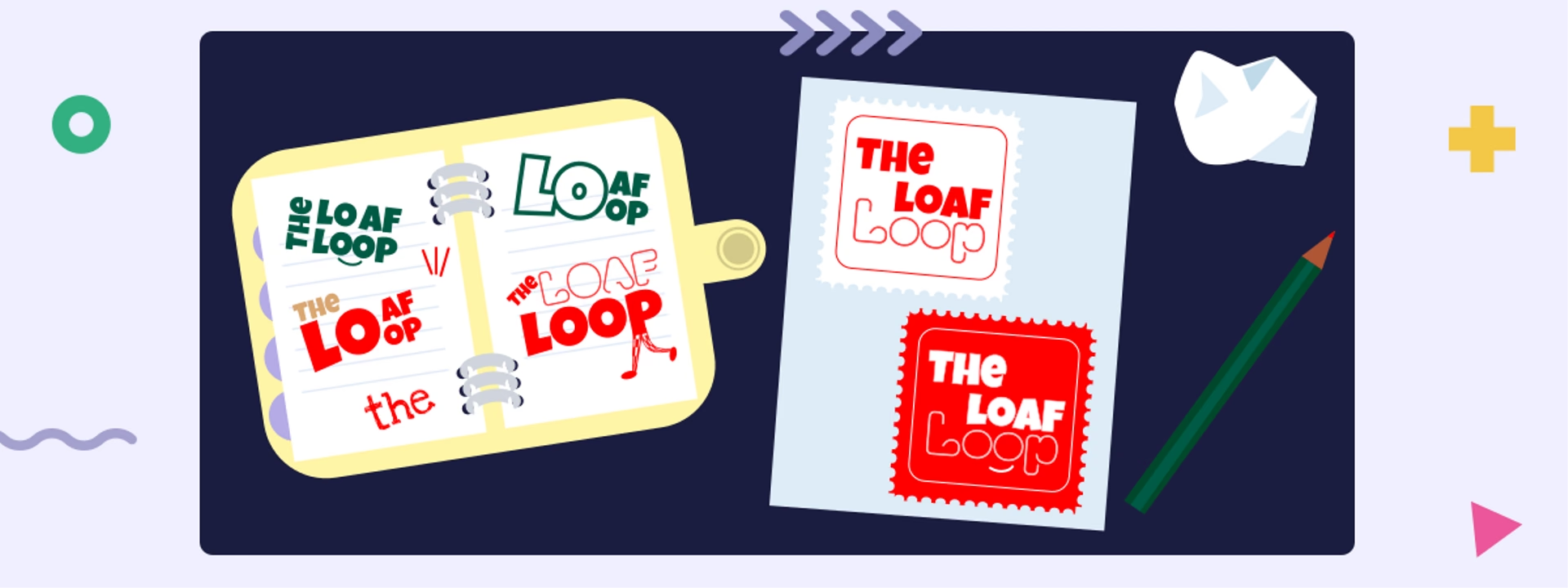
Ruth decides to play on the delivery aspect of her business and uses a parcel stamp in her logo.
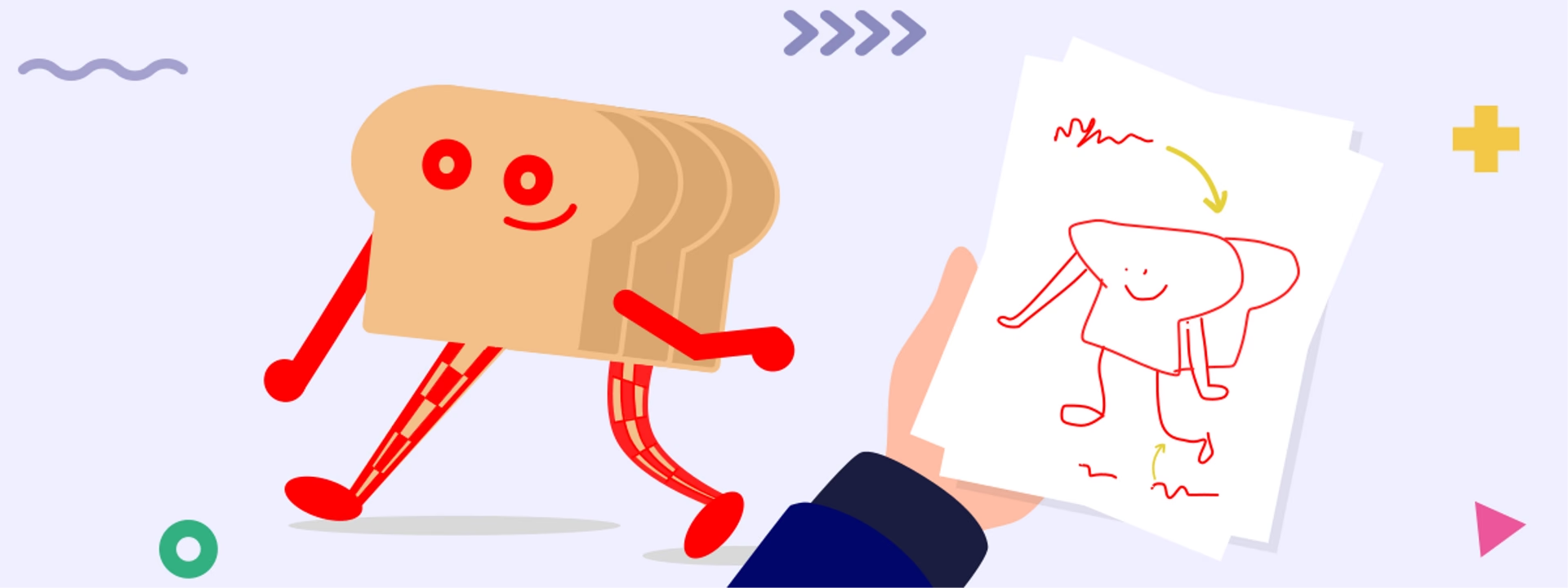
She then creates a lively loaf illustration with legs to act as her mascot for The Loaf Loop, making her brand stand out even more. She edits her logo so that the eyes of the loaf illustration match the “o”s in the Loaf Loop, ensuring everything is cohesive.
Let’s talk colours
Brand colours are a set of shades that you use across your logo, mascot, website and advertising.
Remember what we talked about earlier - branding doesn’t look the same for everyone. A colour palette might not be as crucial to an electrician as it is to a graphic designer. Then again, if you’re a sparky who loves red and wants it to be a key identifier of your brand, it could help create memorability – think of iconic jewellery brand Tiffany’s powder blue.
Ruth decides to use colours to create emotive connotations within her brand identity.
Her colours include red to signal the love that home baking can reflect and the beiges and browns of bread - the heart of her mission.
Ruth’s enterprise exudes personal touch, which can sometimes be lost in big corporations. She needs this to be a key aspect of her brand identity because it’s what sets her apart from large-scale bakeries and supermarkets.
Creating the visual assets
So, now that you’ve decided on a logo and a potential mascot, how do you create visual assets?
Think of this as an opportunity to have some fun; you can even kick off the brainstorming session by scribbling some ideas on a piece of paper. If you want to create these yourself, you can develop ideas using InDesign or Canva for a simpler, more affordable option.
If you aren’t artistically inclined, don’t panic; there are other options. You can outsource this project and hire a graphic designer.
Although this process doesn’t have to cost you anything, you want to get it right. A logo is the symbol that represents your business, after all.
Brand values
Brand values are a set of values your business focuses on upholding. These should resonate with your mission as they will (hopefully) draw customers with similar values. To further increase customer loyalty, align your brand values with your mission. These can help you build a good reputation and act as a focal point for marketing.
One of the Loaf Loop’s core values is craftsmanship. Ruth bakes each loaf of bread with care, prioritising quality ingredients without compromising process or timing. She also values connection and community.
Bread is a universal food and an incredible source of nourishment, which Ruth wants to share with her neighbours (and her neighbours’ neighbours, when business takes off).
Craftsmanship and community play an integral part in The Loaf Loop and help Ruth reach an audience who truly appreciate her service.
Bonus: They don’t mind spreading the word.
Protecting your brand
Now that Ruth has established her branding, she wants to protect her assets.
Trademarking allows you to stop others from selling a similar product or service using the same (or near-same) name or logo as you. To register a trademark in New Zealand, you need to apply through IPONZ. It costs $100 + GST per class for a trademark application, takes at least six months to process, and lasts for 10 years (you can renew the trademark for successive 10-year periods).
But before you race to IPONZ, check that you meet the criteria for requesting a trademark: the name or logo must be free to use and distinct. A trademark can’t just describe the product or service you offer. If you sell onions, you can’t trademark ‘onion seller’ – and Ruth can’t trademark “bread delivery service” because it isn’t distinct enough.

How Hnry can help your sole trader business
Whatever name, tagline, or logo you land on for your business, we’ve got the tax and financial admin sorted.
Hi, we’re Hnry, a full digital accounting service for sole traders. Our brand values are all about making independent earning easy, affordable, and accessible to all.
For just 1% +GST (capped at $1,500 +GST annually), we sort your taxes and make it easy to invoice, manage expenses, and track your business profit.
With Hnry, you never have to think about tax again, so you can channel that energy into building the best brand ever.
If you liked this article and want to develop your business further, we have a wealth of informative articles to help you do just that.